

Legal uncertainty in Indonesia has become an important concern for foreign investors, especially after recent high-profile corruption and public procurement cases.
Table of Contents
- Introduction
- Legal Certainty and Public Accountability
- The Investor’s Blind Spot in Indonesia
- A Lawyer’s Perspective from the Field
- Conclusion
1. Introduction
The recent conviction of Nadiem Makarim, former Minister of Education and co-founder of Gojek, has reopened an important debate about legal certainty, corruption enforcement, and foreign investment in Indonesia. International observers may quickly conclude that Indonesia’s biggest investment problem is legal uncertainty.
That conclusion is understandable, but not complete.
From an academic perspective, legal certainty is indeed essential for economic development. Investors need predictable rules, consistent enforcement, and clear legal boundaries. However, from a practitioner’s perspective, the deeper issue is not only uncertainty. It is often legal misunderstanding.
Foreign investors sometimes enter Indonesia with strong commercial logic, but limited understanding of how Indonesian law actually works in public procurement, state finance, licensing, land administration, regional bureaucracy, and criminal liability.
For broader context, see our related insight on legal risk for foreign investors in Indonesia.
2. Legal Certainty and Public Accountability
The Nadiem case is important because it raises a difficult legal question: when does a policy decision become criminal corruption?
Indonesia’s Anti-Corruption Law, particularly Articles 2 and 3 of Law No. 31 of 1999 as amended by Law No. 20 of 2001, has long generated debate because of its connection with state financial losses and abuse of authority. In public administration, not every failed policy is corruption. A bad decision, weak documentation, or administrative mistake should not automatically become a criminal offence.
At the same time, public power must never be treated as private discretion. Where state funds, public procurement, or public authority are involved, conflict of interest, transparency, procedure, and accountability become legally sensitive issues.
This balance is crucial. Indonesia must protect innovation, but it must also protect public money.
For legal reference, readers may consult Indonesia’s Anti-Corruption Law through official legal databases such as peraturan. bpk.go.id.
3. The Investor’s Blind Spot in Indonesia
Many foreign investors ask whether Indonesia has opportunities. The answer is obvious: yes. Indonesia has natural resources, a large domestic market, a growing digital economy, and strategic importance in Southeast Asia.
But opportunity is not the same as legal safety.
In Indonesia, documents matter. Authority matters. Procedure matters. Local administrative practice matters. A commercially efficient decision can still create legal exposure if it is not supported by proper approvals, transparent process, and clear legal reasoning.
This is why investors should not only ask: “Is this project profitable?”
They must also ask: “Is this project legally defensible?”
For foreign companies entering Medan, North Sumatra, or wider Indonesian markets, early due diligence is not a formality. It is a shield. See also our internal guide on legal due diligence in North Sumatra.
4. A Lawyer’s Perspective from the Field
As a law lecturer, I see the Nadiem case as part of a larger doctrinal discussion about the boundary between administrative law and criminal law.
As a lawyer, I see something more practical: many legal problems in Indonesia begin long before litigation. They begin when contracts are drafted poorly, authority is unclear, minutes of meetings are incomplete, procurement records are weak, or compliance review is treated as secondary.
Foreign investors should not wait until a dispute arises before involving Indonesian legal counsel. In many cases, the most important legal work happens before signing, before payment, before licensing, and before implementation.
5. Conclusion
Indonesia’s investment risk is not legal uncertainty alone. It is the combination of legal uncertainty, weak documentation, institutional complexity, and insufficient legal understanding.
The lesson is not that Indonesia is unsafe for investment. That conclusion is too simplistic.
The better lesson is this: Indonesia rewards investors who respect local legal structure, document their decisions properly, and seek early legal advice.
Roads move goods. Ports move exports. Natural resources move industry.
But in Indonesia, legal understanding moves capital.
How PW Law Firm Medan Can Assist
PW Law Firm Medan assists foreign investors, companies, entrepreneurs, and international clients in understanding and managing legal risks in Indonesia, particularly in Medan, North Sumatra, and wider Sumatra.
Our legal assistance may include:
Legal due diligence for investment, land, corporate, licensing, and transaction matters.
Regulatory and compliance review to identify potential exposure before signing contracts, entering partnerships, or implementing projects.
Contract drafting and review for commercial agreements, cooperation agreements, procurement-related documents, and corporate transactions.
Legal risk assessment involving public administration, land matters, permits, corporate governance, and dispute prevention.
Representation and legal strategy in civil, administrative, criminal-related, and commercial disputes where Indonesian legal counsel is required.
At PW Law Firm Medan, we combine academic legal analysis with practical field experience to help clients make legally defensible decisions in Indonesia.
Contact PW Law Firm Medan
For legal consultation regarding investment, corporate matters, land issues, licensing, contracts, or dispute prevention in Indonesia, you may contact:
PW Law Firm Medan
Website: https://pwlawfirmmedan.com
Email: pwlawfirmmedan@gmail.com
WhatsApp: +62 812 6327 8064
Location: Medan, North Sumatra, Indonesia
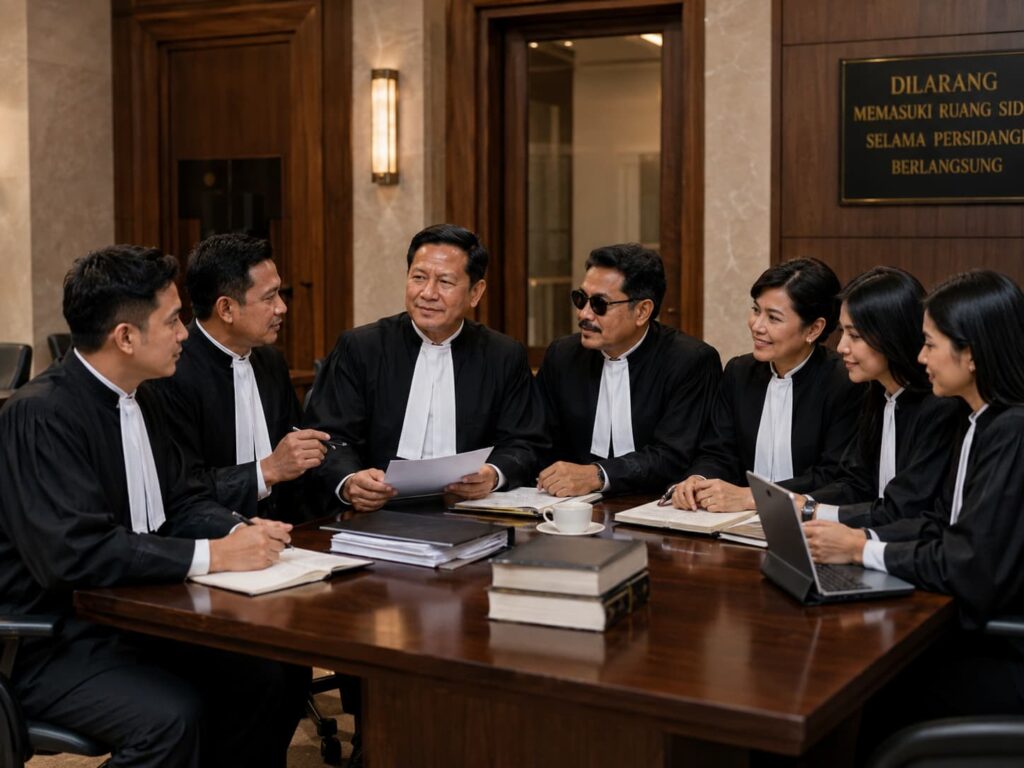
LAWYERS WHO KNOW SUMATRA
Author
Dr. Padriadi Wiharjokusumo, S.S., S.H., M.H.
Advocate | Lecturer in Law | Founder / Legal Counsel at PW Law Firm Medan
Dr. Padriadi Wiharjokusumo is an Indonesian advocate and law lecturer based in Medan, North Sumatra, Indonesia. His work focuses on corporate legal risk, land and property matters, investment-related legal issues, dispute prevention, litigation strategy, and legal advisory for domestic and international clients.
Through PW Law Firm Medan, he assists clients in navigating Indonesia’s legal, administrative, and institutional landscape with a practical and legally grounded approach.
Disclaimer
This article is provided for general legal, academic, and professional discussion only. It does not constitute formal legal advice, investment advice, or a legal opinion for any specific case or transaction.
Readers should not rely solely on this article when making legal, commercial, or investment decisions. For specific legal matters in Indonesia, please consult qualified Indonesian counsel based on the relevant facts, documents, jurisdiction, and applicable laws.
LegalUncertainty #ForeignInvestment #IndonesiaLaw #LegalDueDiligence #InvestmentRisk #BusinessLaw #PWLawFirmMedan